The Future of ERM: 12 Hidden, or Not So Hidden, Threats
# 4 Risk Fatigue
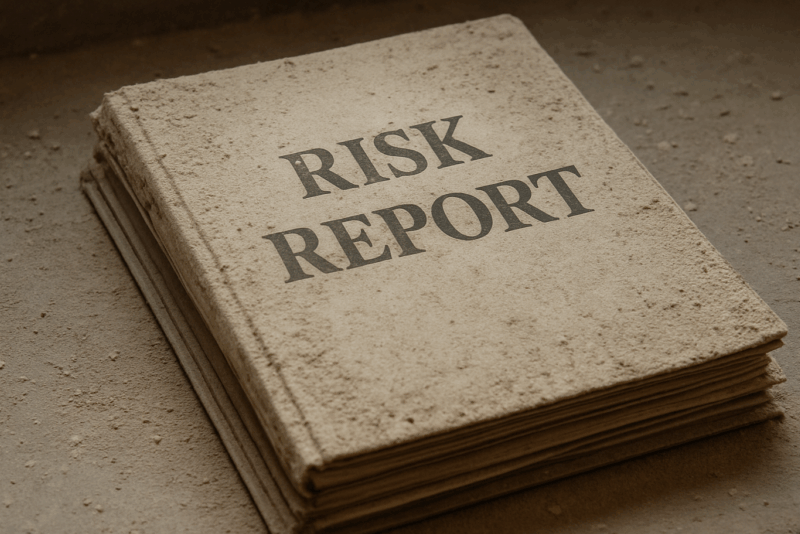
There’s a point in every organization where risk management starts to lose its edge. The lists get longer, the reports get thicker, and the meetings start to sound the same. The conversation shifts from “what’s next” to “what now.” It’s not that the risks have disappeared; it’s that people have stopped listening.
This is risk fatigue, and it’s a quiet but powerful force that can hollow out the credibility of even the best risk programs.
When Risk Management Becomes Noise
Executives tune out when every conversation is about what might go wrong. It’s not cynicism, it’s overload. The human mind has a limit for threat awareness, especially when the same warnings repeat without resolution or relevance. Over time, the risk register becomes a graveyard of concerns that never die and never move forward.
In this environment, risk managers can become the department of bad news. Each new report adds another layer of warning. Each discussion ends in more caution. And while that caution is meant to protect the organization, it can also stall progress, frustrate leaders, and shift the perception of ERM from enabler to obstacle.
Once that happens, engagement drops. Leaders start avoiding risk discussions, reports gather dust, and the organization quietly moves decisions elsewhere, often outside of formal risk channels.
The Structural Causes of Risk Fatigue
Risk fatigue rarely comes from laziness or apathy. As we have discussed in earlier posts, it often comes from structure. Many ERM programs are built around a static process: identify, assess, report. The rhythm doesn’t change, even when the environment does. It is what is comfortable, what has worked in the past (or assumed to have worked).
The result is a constant flow of risks that look the same, sound the same, and rarely connect to what’s driving the business. For example, a manufacturing company might track “supply chain disruption” year after year without linking it to the strategic push toward nearshoring or digitalization. The label remains, but the insight is gone.
Another factor is volume. When risk managers feel pressure to be comprehensive, they capture everything—operational, strategic, reputational, environmental—without prioritizing or integrating. A list of sixty risks sends a single message: no one knows what truly matters.
Finally, there’s the issue of language. Risk discussions often use technical or defensive phrasing: mitigation, control, tolerance. These terms serve compliance needs but not strategic ones. They signal that risk is something to avoid, not something to understand, and certainly not something to leverage or capitalize upon.
The Consequence: Lost Credibility
When risk fatigue sets in, the credibility of the ERM function erodes. The process may remain in place, but its influence fades. Executives stop associating ERM with value creation.
In boardrooms, risk updates become check-the-box moments rather than drivers of conversation. Operational teams see risk management as a reporting exercise instead of a tool for decision-making. And the ERM leader, no matter how skilled, finds themselves managing process rather than perspective. They become an actor / actress that is typecast because of one role, when they have so much more to offer and depth.
This is not just a cultural problem. It’s a strategic one. Because when ERM loses its ability to engage, it also loses its ability to anticipate.
Shifting from Threats to Signals
Breaking out of risk fatigue requires reframing the purpose of ERM. As indicated previously, instead of focusing on cataloging risks, the goal should be to identify signals, early indicators of change that could influence the organization’s path.
This shift moves ERM from a reactive discipline to a forward-looking one. It positions risk not as a defensive layer but as a source of foresight.
Signals can come from anywhere: technology trends, customer behavior, regulatory movement, or shifts in workforce expectations. The key is connecting these signals to strategic decisions in real time.
For instance, if a manufacturer sees increasing volatility in rare earth supply, that’s not just a supply chain risk. It’s a potential signal about future materials strategy, supplier relationships, and even product design.
By translating threats into strategic context, risk teams turn fatigue into curiosity. Executives start asking questions again: what does this mean, what’s next, what can we do?
The Power of Opportunity Framing
Opportunity framing doesn’t ignore risk. It recognizes that within every risk is a decision point, and that decision can often reveal new paths for innovation or advantage. Many products exist despite the risk that was no doubt taken. We don’t look back on these inventions to see the clear risks, but how innovative the people or companies were.
If ERM highlights how certain risks open doors to cost savings, market positioning, or operational resilience, the tone of discussion changes. Leaders move from “how do we avoid this” to “how do we prepare for and use this.”
For example:
- Cyber risk discussions can include how digital resilience builds trust and brand equity, not just the defensive stance of the minimum to protect data.
- Climate risk can lead to exploring new partnerships or materials for sustainability goals. Many who had foresight and explored risks and opportunities a decade ago are now thriving because they took a proactive, forward-looking approach.
- Regulatory uncertainty can drive investment in more flexible systems and governance models, thereby increasing the agility of operations.
Each of these turns a risk into a strategic narrative, one that keeps leaders engaged because it aligns with forward movement rather than fear.
Making ERM Actionable Again
To rebuild credibility, ERM needs to show its impact through clarity, timing, and follow-through.
- Simplify the message.
Executives don’t need a catalog; they need a compass. Highlight the top few signals that could meaningfully shift strategy or performance and requires decisions / actions. Visuals are used to tell the story efficiently. - Link insights to decisions.
For every key risk or signal, identify the decision it informs. This might be a product launch, an investment, or a strategic shift. When risk management supports a choice, it stops being noise. - Close the loop.
Report outcomes. When foresight leads to a better decision, tell that story. Visibility builds trust, and trust rebuilds attention. Celebrate the successes. - Refresh the rhythm.
Move away from static annual updates toward more dynamic cycles, such as quarterly foresight scans, horizon reviews, or cross-functional workshops. Changing the cadence keeps thinking fresh.
A Cultural Reset
Ultimately, addressing risk fatigue isn’t about redesigning the framework; it’s about rebalancing the mindset.
ERM should be seen as an intelligence function, not just a compliance one. It should serve as a bridge between what the organization fears and what it hopes to achieve.
That starts with tone. Replace language that implies control with language that invites exploration. Ask questions like:
- What’s changing faster than we expected?
- What assumptions might no longer hold true?
- Where could emerging risk open space for innovation?
These are the kinds of questions that reignite interest and reposition ERM as a thinking partner rather than a reporting function.
Restoring Credibility Through Curiosity
Risk fatigue sets in when leaders stop caring. The solution isn’t more information; it’s better connection.
When risk management helps people see what’s possible, not just what’s probable, it earns its place back at the strategy table. The goal isn’t to eliminate bad news but to balance it with useful foresight and practical pathways forward. And why is bad news still treated with such negativity?
The organizations that do this best are the ones that realize risk management is, at its core, a leadership discipline. It’s about equipping people to navigate uncertainty with clarity and confidence.
Because in the end, the opposite of risk fatigue isn’t optimism. It’s curiosity.
Let’s discuss how to keep your risk program moving forward without missing a beat.
Click here to schedule a Discovery Session or use the Discovery Session button on my website.